These Elite Wrestlers Went Up In Weight And Had Even More Success
These Elite Wrestlers Went Up In Weight And Had Even More Success
The list of wrestlers who have gone up in weight and continued to have the same or greater levels of success is longer than you might think.
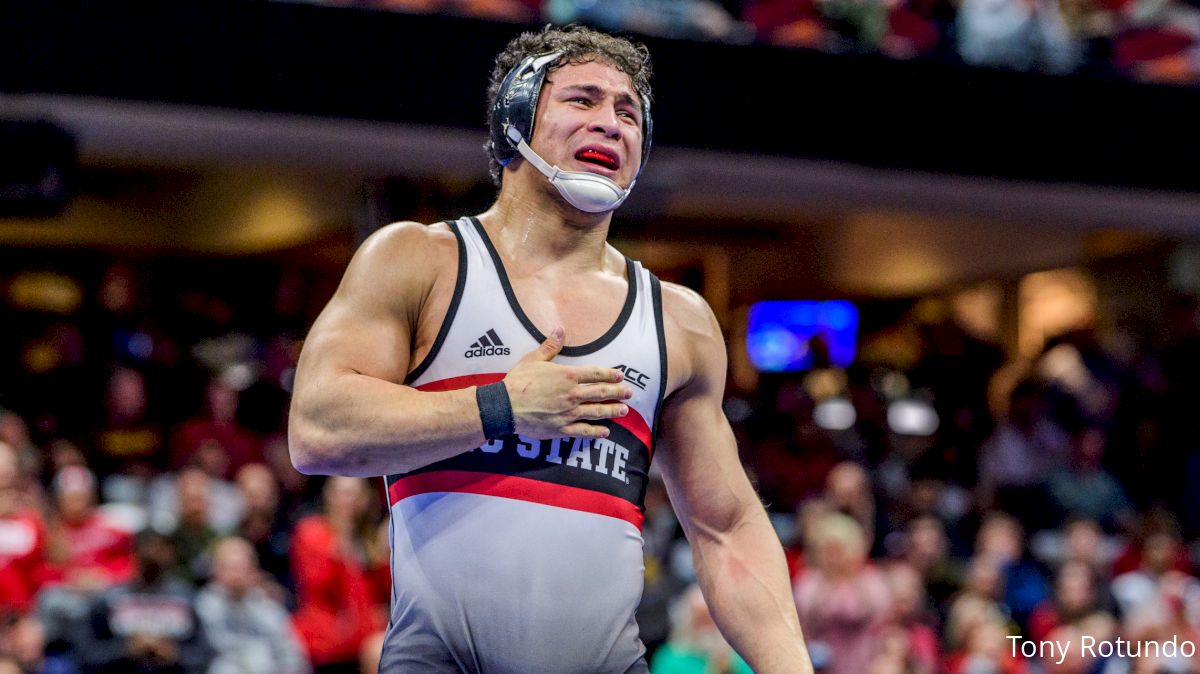
This Friday night we're releasing "Bad Cut" a FloFilm about the perils of extreme weight cutting. In that vein I wanted to examine some wrestlers who went up in weight and had equal or greater success to earlier in their careers.
Watch our new FloFilm "Bad Cut" live on Flo
Friday April 24 | 8:00 PM Eastern
Perhaps most famously there's Kyle Dake, the only wrestler to win four NCAA titles at four different weights. Dake also went up to 86kg and made the Olympic Trials finals, as well as two world golds up at 79kg, all that after starting his college career at 141 pounds.
Now Dake might not be great to start with since he had success every weight he went, but I still think there is value in showing that someone can continue to be themselves while going up and there's no guarantee he would've been a four-time champ had he stayed at 141, and in fact I believe it would increase the likelihood of him losing more often since he would be cutting more.
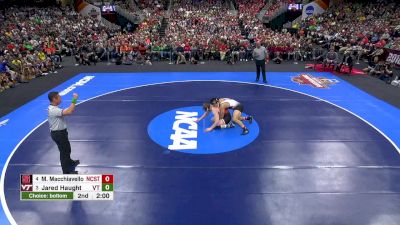
Perhaps most recently the best example of a guy going up in weight and having success is Mike Macchiavello, who won the national title at 197 a year after finishing in the round of 12 at 184. He continued that success by making the national team at 92kg a year later, further justifying his decision to go up and allowing himself to unlock his full potential.
Just the year prior, Brett Pfarr made the finals at 197. His trajectory was also excellent, going from 1-2 at 184 in 2015, to third up at 197 a year later and then in the finals. Those are just two extremely recent examples of big men deciding to cut less weight, and important ones. Most people focus on lightweights, who by and large do cut the most weight. But similarly the big men may get trapped in a weight cutting mindset and limit themselves as a result.
If those guys had a little too much success for your taste before bumping up, let's take a look at Ronnie Perry. Currently a Lock Haven assistant, he came to his alma mater as a 125 pounder, and was barely over .500 his redshirt year, which is theoretically when you're facing the easiest competition. Then he went up to 133, and he did better, qualifying for NCAAs, but went 0-2 there.
Perry didn't wrestle in the postseason in 2016, but went 1-2 at the national tournament as a junior 141 pounder. Then, his senior year, he made the NCAA finals. Yes, he was a 15 seed, but that's a better season than he'd ever had and after starting his career as a 125 it culminated with him wrestling on Saturday night in March as a 149. He's the poster boy for stuff like this.
At the start of this week we had Nahshon Garrett on the Bader Show, and although he accomplished a lot at 125, it wasn't until he moved up to 133 that he finally won his national title. Nahshon said the weight cut got so bad that it scarred him to the point he was considering not even wrestling his senior year. He said the weight cut put a lot of doubts in him and prevented him getting better to the point that he actually felt he had gotten worse at the end of his junior year.
It's a common refrain about weight cutting that it takes away from your ability to get better. That's something that David McFadden has echoed recently as he's discussed his move to the Penn RTC, that the joy was removed from the sport at the points in his wrestling career when he was cutting the most weight. No matter how you attack the mental side of that, it's still true that cutting weight literally takes time away from: recovery, technique, mental training, film watching, studying, and many other aspects of your life. Very simply, the more time you spend cutting weight, the less time you're spending on the myriad other things that help wrestlers improve.
Getting back to guys who maintained their level of success, David Taylor went from 135 as a high school senior to 157 his first two years of college and then won two Hodges and a third finals appearance up at 165. Once he got to the senior level he realized his ideal weight was actually 86kg, about 15 pounds higher than the 74kg he had been wrestling at.
Then there's Jordan Oliver, who hated the cut to 133 so much that he went up not one but two weight classes, and didn't give up a single takedown his senior year at 149. Or what about Bo Nickal, a guy who made the finals at 174, won two titles at 184, and then dominated his way to a Hodge Trophy at 197.
Derek White began his career as a 197 for Oklahoma State, spending his first three years there and only being a few matches above .500 against other D1 competition. But then he made his way up to heavyweight and made the bloodround as a junior before being in the finals as a senior.
Then there's Nick Amuchastegui, who went 1-2 at 165, then finished fourth, before making the finals his final two years up at 174lbs. Similarly Jon Reader was fourth as a sophomore 165 and then entered NCAAs as the four seed a year later. But after losing in the first round and not placing, he went up to 174 as a senior, going undefeated and finishing out his career with a national title. Paraphrasing how going up helped him, here's what he said on The Bader Show:
"I should've been up a weight the year prior. 174 was 100% better fit for me. My body, it wanted to grow, and once I allowed it to, everything just started to fall in place. My health was a lot better, I could focus on the correct things."
One of Kyle Bratke's favorite "go up in weight" guys is Steven Rodrigues of Illinois. He went from going 0-2 and getting pinned twice at 141 in the 2015 Big Ten championships to placing fifth in the country up at 165. That's three weight classes in one year!
Nick Heflin was by no means bad at 174, in fact he finished fifth as the eight seed his junior year. But after going up to 197 his senior year, he was the top seed and entered the NCAA finals with a 28-1 record. Although he fell to J'den Cox in a match he nearly won, it was unquestionably the best season of his career.
How about Bubba Jenkins? His weight cut to 149 nearly killed him by the end of it, but then gets up to 157 and wins a national title. Ed Ruth and Quentin wright were both national champs, but then went up in weight and were able to maintain that same level. Similar to Nahshon Garrett, Jayson Ness went from a finalist at 125 to the Hodge Trophy winner at 133.
Most recently, everyone was shocked that Ryan Deakin could hold 149 for an entire season. He didn't place as a freshman, went up to 157 and placed as a sophomore and then entered this year's NCAAs as the undefeated 1 seed. Taylor Lujan was round of 12 a couple times at 174, then goes up to 184 this year and he was also the 1 seed.
Last but not least is Luke Pletcher. This is a guy who could clearly win at 133, but he picked up bonus in less than a third of his matches and frequently had to win one or two point matches, for no other reason than that the cut took a lot out of him and he didn't have the energy to keep a high attack rate. Moves up to 141 and boom, he was one of the most relentless leg attackers all year, and not just the high rate, but the ferocity, frequently getting guys up off the ground.
Not everyone needs to go up in weight, and some high school age wrestlers could possibly afford to lose a few pounds. But the antiquated notion that the more you can drop is gone. If you're thinking about going up in weight, that it might help your career, well, just ask these guys.