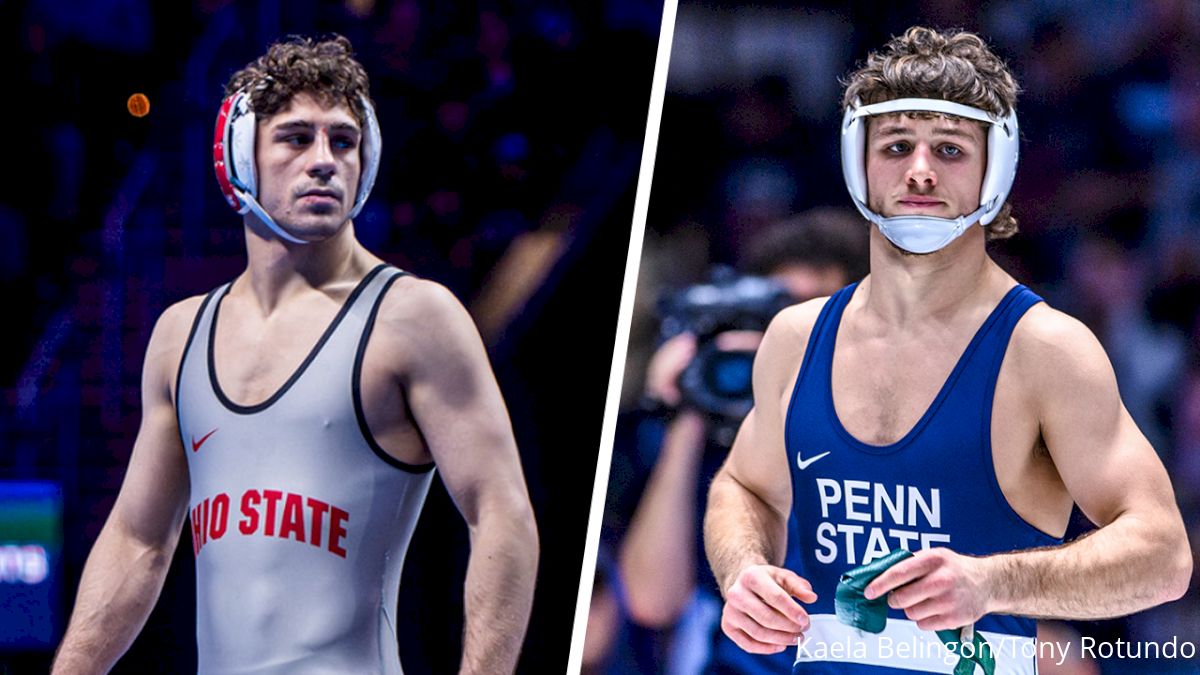
Just How Does NCAA Eligibility Work? Does Anyone Know?
I have a pretty good idea of how it was supposed to work. You get four years, a freshman year, a sophomore year, a junior year, and a senior year. And then you graduate and can no longer play sports for the school you attend.
Unless you redshirt, which gets you five years, but only four varsity. Unless you're at an Ivy League school or somewhere else that doesn't allow redshirts. Though you could still take a gap year after high school and defer eligibility for a year. Or unenroll and then re-enroll after a year, assuming your school allows it.
And also if you get injured there are medical redshirts, or Olympic redshirts, if you meet certain criteria. And you can pause your eligibility if you go on a religious mission. Or join the military. But that's it. I think.
But none of that is going to matter going forward, because the NCAA just passed a new set of rules that almost entirely replace the old set.
How Will NCAA Eligibility Work Going Forward, Does Anyone Know?
How they're supposed to work going forward is all in that article. But to save you a click: no more redshirts*, five years of eligibility for everyone, your five years start counting after you graduate high school or the year you turn 19, whichever is first.
*The three exceptions that can still pause are Military service, Missions for religion, and Maternity leave. The '3 exEMptions you could call them.
The new ruleset has been dubbed the '5 for 5' plan by the collegiate sports community, much to the chagrin of the NCAA, as one of the main objectives of the new rule was to emphasize that not everyone is going to get five years of eligibility. That is the maximum number of years an athlete will be able to play varsity D1 sports, not the minimum.
Also chagrinning the NCAA is the number of lawsuits being filed, specifically by athletes who graduated college in 2026 in four years who AREN'T being grandfathered a fifth year. Although perhaps the NCAA is incapable of being chagrined, as being sued seems to be a popular hobby of theirs.
So Answer The Question Already: Will Haines & Mendez Get A 5th Year Of NCAA Eligibility?
Unfortunately, we won't know until some lawsuits are settled, or at least progress far enough to give us more confidence on giving an answer besides 'maybe' or 'depends'.
Consider the following timeline:
June 23: The NCAA D1 Cabinet announced the new '5 for 5' rules.
July 8: A basketball player who graduated from Northern Colorado in 2026 after just four years sued the NCAA to get a fifth year. It is a nationwide class action lawsuit, so all NCAA athletes in all sports can join the lawsuit.
July 31: A federal district judge in Colorado granted a preliminary injunction stopping the NCAA from denying four-year 2026 grads their fifth year. Sounds like a big win for Haines and Mendez. But not so fast, the NCAA appealed this ruling.
Aug 21: A federal district court agreed with the NCAA 2-1, effectively ending the legal fight to give a fifth year for 2026 grads.
However, that was just the federal legal route. Each state can also overrule the NCAA in a court of law.
In Ohio, the same basic sequence played out as it did in the federal class action lawsuit. An athlete sued to get an extra year; a lower court agreed and overruled the NCAA; a higher court disagreed and overruled the lower court.
Technically, the Ohio case could be appealed again, but it doesn't look promising as football season has already started.
No similar or 'parallel' suit has been filed in Pennsylvania, so that federal route would be the only option for Keystone State athletes.
As such, it would appear that Levi Haines and Jesse Mendez will not compete in college next season.
Or Will They?
If you haven't picked up on the theme I'm putting down throughout this blog, it's that no one knows anything. Levi and Jesse could sue tomorrow and win whatever they need to win in time to wrestle at NCAAs.
Or the NCAA could reverse course.
Or Congress could pass a law that includes a provision that grants 2026 grads an extra year.
Or the Big Ten Conference could step in and the NCAA might agree to let them set their own rules.
If you want me to put on my robe and wizard's hat and try to predict the future using my collection of mystical runes, I would guess that the latter is the most likely path to Mendez and Haines wrestling in the 2027 NCAAs.
The power conferences are taking the reins on more NCAA issues every day, and if history is any guide, that trend will continue. Conferences like the Big Ten and the SEC will determine the rules that football uses, and that will inform what other sports and other divisions do.
Not every rule that applies to Big Ten and SEC football will apply to everyone in every sport. For instance, the Ivy League and the service academies (Army, Navy and Air Force) all participate in D1 sports, and they all have very different standards and operating procedures that are enforced internally, mostly by their own administration.
As for the NCAA, they will still be needed to administer the championships of all the sports besides FBS football, and serve as a kind of accreditation board for schools that want to be known as an NCAA caliber instituion.
But I digress.
In Summary
While the fight isn't over, the chances of Levi and Jesse wrestling in St. Louis next March are low and looking slimmer by the day.
I'd also be remiss if I didn't mention the other athletes that are in the same situation as Haines and Mendez. Though they haven't won a national title, the following wrestlers all graduated in 2026 after just four years and qualified for the NCAA tournament at least once.
Dyson Dunham, VMI
Wolfgang Frable, Army
Blake Schaffer, Kent State
Alex Semenenko, Brown
Jordan Soriano, Drexel
Ryan Vigil, VMI
Let us know if we missed anyone. As for what the future will hold regarding NCAA eligibility, all I can say was what the song said while the credits rolled after the 1980s movie Heathers ended: Que Sera, Sera!