The scale is quiet.
It doesn’t care who you are. It doesn’t care what you’ve been through. It doesn’t care how hard you’ve worked, how little you’ve eaten, or how badly you want it.
It just gives you a number—and expects you to accept it.
And in wrestling, that number doesn’t just measure weight—it defines opportunity.
I’ve stood on that scale more times than I can count—heart racing, body drained, mind spiraling—waiting for it to decide if I was enough.
Enough. Or not.
Because the body you’re trying to control isn’t always under your control.
For most wrestlers, cutting weight is a battle of willpower. Early mornings, extra layers, long runs, controlled meals. It’s hard. It’s supposed to be. But for female wrestlers, there’s a layer to that battle that often goes unseen, unspoken, and misunderstood.
The fight isn’t just against the scale—it’s against your own body.
Hormones shift everything. Your weight. Your energy. Your emotions. One week, your body responds exactly how you expect it to—sharp, controlled, predictable. The next, it doesn’t. It holds on. It fluctuates. It feels foreign.
And no matter what your body is going through, the expectation never changes. Make weight.
No explanation. No adjustment. No room for reality.
So you stay quiet.
You push harder. You restrict more. You question yourself.
And somewhere in that process, the mental weight starts to feel heavier than the physical one.
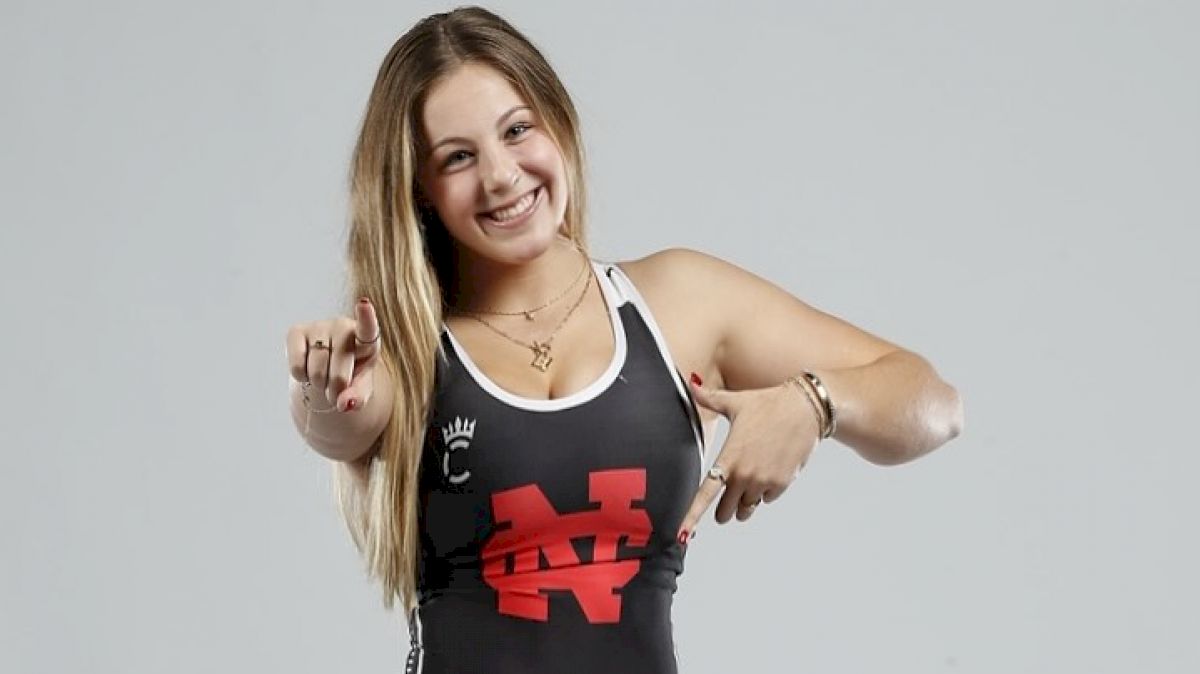
I know this because at one point, this wasn’t just the sport—it was my reality.
I ended my high school career as a three-time FHSAA state champion, 2025 Tricia Saunders Florida Excellence Award winner, and 4X National All-American at some of the toughest tournaments in the country. Everything I had worked for, I had achieved. From the outside, it looked like the perfect ending—and the perfect beginning to the next chapter of competing at the college level at one of the top programs in the country.
But right after that high point, everything I thought I understood about my body changed. It all happened so fast.
Two ovarian cyst removal surgeries. Back-to-back.
Three months where I couldn’t wrestle. Couldn’t train. Couldn’t move the way I was used to. Three months of sitting in a body that no longer responded like an athlete’s body should.
I spent countless hours searching for answers, trying to speed up the process—but no one was talking about it.
When I stepped into college, I wasn’t the same wrestler.
I had gained weight—but not from lack of discipline. Not from laziness. From surgery. From healing. From a body trying to recover from something bigger than the sport.
But wrestling doesn’t adjust for healing.
The season comes. The weight class is set. And suddenly, you’re expected to force your body back into something it’s no longer ready for.
And when your body stops responding the way it used to, the battle stops being physical—and becomes mental.
Why can’t I fix this?
Why doesn’t anything work anymore?
Why does my own body feel like it’s working against me?
But it didn’t stop there.
Recurring cysts. Endometriosis. Medication that changed everything—how my body held weight, how I felt, how I functioned. It became a cycle I couldn’t outwork, outrun, or out-discipline.
And this is the part of the sport no one wants to talk about.
The part where you’re doing everything right—and still falling short of a number. The part where your body isn’t failing—you just don’t understand it anymore. The part where you sit in silence, because there’s no space for this conversation.
Female wrestlers are expected to endure the same standards, without acknowledgment of the added weight they carry.
Not just physical weight.
Hormonal weight. Emotional weight. Mental weight.
And we’re taught to push through all of it like it doesn’t exist.
So we internalize it.
We blame ourselves.
We minimize it.
We start to believe that if we were stronger, tougher, more disciplined—we could fix it. But here’s the truth I had to learn the hard way:
Your body is not your enemy.
It’s not something to punish until it fits a number. It’s not something to silence when it’s asking for help.
It’s something to understand.
Because strength isn’t just making weight—it’s knowing when your body needs something different.
Strength is showing up when you feel out of control.
Strength is competing when your confidence is shaken.
Strength is refusing to lose yourself in the process of trying to fit into something you’ve outgrown.
And this issue? It remains ignored.
Not because it’s rare—but because it’s uncomfortable.
Because acknowledging it would mean admitting that the system doesn’t fully account for female athletes. That the expectations don’t always match reality. That the conversation is long overdue.
But it’s time we start having it.
Because no athlete should feel alone in something this real.
To every female wrestler—to every female athlete who has stood on that scale and felt the pressure, the frustration, the silence:
I see you, I hear you, I feel you.
I am you.
In the moments you question your body.
In the days nothing seems to work.
In the quiet battles no one else notices.
You are not alone.
You are not broken.
You are not weak.
And you are not failing.
You are navigating something that deserves to be seen.
Keep going.
Not just for the number. Not just for the match.
For yourself.
Because the strongest athletes aren’t just the ones who make weight—they’re the ones who don’t lose themselves trying.
You are more than a number.
And it’s time this sport starts listening.