The crowd rose to its feet and cheered wildly when Jake Deitchler made the 2008 Greco-Roman Olympic Team at 65 kg. The 18-year-old had just graduated from Anoka High School, and he was the new media darling of the tournament when he upset two-time World bronze medalist Harry Lester, then won straight matches over Faruk Sahin, a 32-year-old who competed for the Army’s World Class Athlete Program.
“After it happened, I don’t think I slept for two days,” Deitchler said. “I was so excited. I think I gained 42 pounds in two days. I wrestled 145 and got back to Anoka a few days later, and got to 187 pounds. I should have held it to 170. It’s crazy stuff, but so much fun. It was a wild ride.”
The wild ride ended at the Beijing Olympics with a 0-2 performance. Although he didn’t know it at the time, making the Olympic Team as a high schooler was the high point of Deitchler’s competitive wrestling career.
A seemingly endless string of concussions derailed his ability to train consistently, leading to his exit from competition in 2012 at the age of 22 following a brief stint at the University of Minnesota.
Deitchler’s rise to wrestling superstardom was an anomaly in a sport dominated by grown men. He was the fourth American to qualify for a World or Olympic team in Greco-Roman or men’s freestyle wrestling as a high schooler, and the first since 1983.
The United States first competed in the World Championships in 1961, with most of the U.S. participants being college graduates. Qualifying as a teenager was a historical oddity.
Jimmy Carr made the 1971 freestyle World team as a 16-year-old high school sophomore and the 1972 Olympic team as a 17-year-old junior.
Mike Farina made the 1976 Greco-Roman Olympic team as an 18-year-old senior.
Jeff Clark made the 1983 Greco-Roman World team as a 17-year-old junior.
And, most recently, Deitchler.
Senior Men's Greco And Freestyle World Teamers As High Schoolers
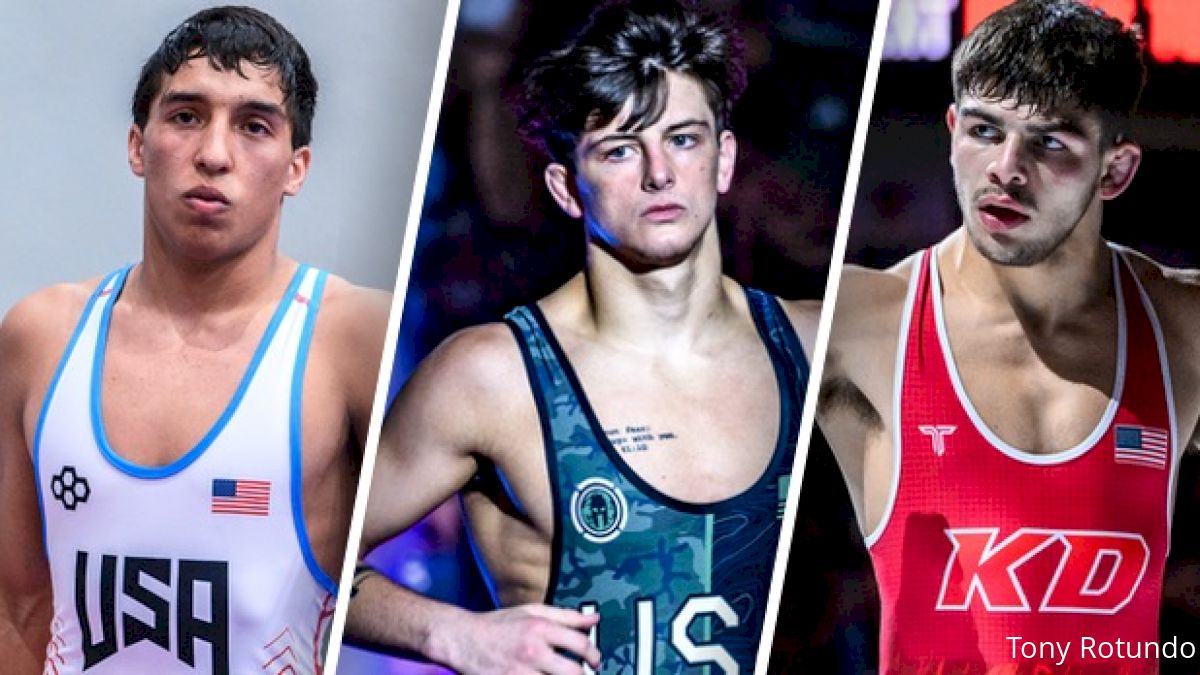
Until, of course, 2025 Final X, where three U.S. wrestlers qualified for the World Championships as high schoolers. Jayden Raney, Jax Forrest, and PJ Duke shattered our perception of what’s possible, taking the youth movement to new heights.
Raney and Forrest are 18-year-olds who will compete at the Worlds as high school seniors, while Duke is a 19-year-old true freshman at Penn State who qualified while he was still a prep at Minisink Valley High School in New York.
Andre Metzer was 19 when he won a bronze medal at the 1979 World Championships, and Kyle Snyder was 19 when he won the 2015 World Championships. However, neither qualified as high schoolers; both were already in college.
High School Stars Taking On The World At The 2025 World Championships
*Duke qualified for the World Championships in high school but is a true freshman at Penn State.
Making a Senior World team as a high schooler is one thing. Succeeding when you get there is another.
History hasn’t been kind to our prep stars before this year, but the formula for early senior-level success includes two ingredients: coaching and belief. Carr, Farina, Clark, and Deitchler didn’t place at the Worlds or Olympics, and none made another senior team after high school, but all were fearless in their approach.
Jimmy Carr’s younger brother, Nate, was 11 when he made the 1971 World Team. Nate eventually won three NCAA titles for Iowa State (1981-83) before winning a bronze medal at the 1988 Olympics. His son, David, is the U.S. men’s freestyle 74 kg representative at the upcoming World Championships.
"Jimmy Carr had no fear." -- Nate Carr, 1988 Olympic bronze medalist
“I think the clubs have consistent, good coaches around,” Carr said. “Hats off to (the high schoolers) who are doing well because they are definitely coachable. That means they are listening to somebody who has a lot of wisdom, a lot of insight. That’s why they are there. They aren’t fearing who they are wrestling as much as they’re looking at the technical aspects of somebody who has already been through it.
“Now, the little kids are getting it. They’re getting better coaches and more clubs. It’s not happening by accident. Those guys are putting in the work, and you can see it. I can’t express how tough Jimmy was. Even before he made the Olympic Team, he beat an Olympic champion from Russia. He had no fear.”
Cutting Edge Coaching
For Clark, he credits Joe DeMeo for his improbable rise to early success. His maniacal coaching style was built on striving for the top spot in the world, not state or national championships. As a 13-year-old eighth grader, he placed in the top six at the Senior Greco-Roman national championships.
Clark dismantled Lew Dorrance, the returning U.S. senior World teamer, to qualify for the 1983 World Championships as a high school junior. The cut to 52 kg (114.5 pounds) was nearly impossible during the 1984 Olympic Trials, but he was forced to try since he was No. 1 on the ladder.
"My career was essentially a failure because I didn’t make an Olympic Team," Jeff Clark said. "I didn’t win an Olympic medal. That’s what I internalized. It never seemed to be enough until you had that World title or Olympic gold.”
“Joe, as a coach, technically, was so powerful,” Clark said. “You had a technical grasp of the sport to compete against those guys as a boy. Joe said, ‘If you wait until you’re ready, you’ll never do anything.’ He talked me into doing it.
“A lot of things under Joe became machine-like. You were always asking, ‘What’s next?’ You were kind of a machine built toward being an Olympic champion. Everything else was great, but my career was essentially a failure because I didn’t make an Olympic Team. I didn’t win an Olympic medal. That’s what I internalized. It never seemed to be enough until you had that World title or Olympic gold.”
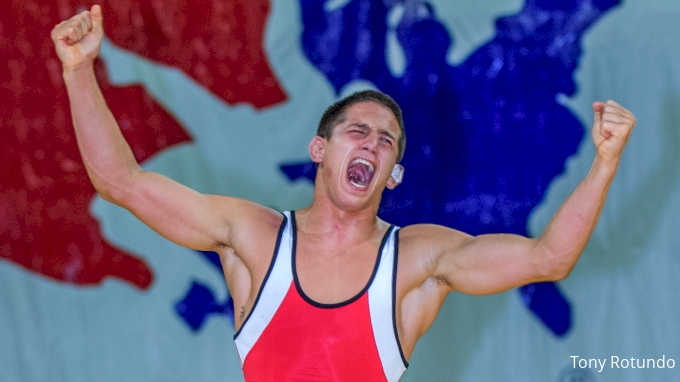
Jake Deitchler made the 2008 Greco Olympic team as an 18-year-old
And it didn’t hurt that Deitchler had Brandon Paulson in his corner. Paulson, a 1996 Olympic and 2001 World silver medalist, was the primary reason his protege had early success.
“It’s a wild journey for these high school kids,” Deitchler said. “I remember Brandon Paulson told me that you don’t know. You think the Olympics will last forever and that you’ll be there every time, but there are no guarantees in life.
“The moments you do have and the teams you do make, make the most of it and don’t settle. I think we set our goals too low. We are happy to make the Olympic team, but it shouldn’t be that. You should go for a medal and not settle for anything less. That should have been my mindset.”